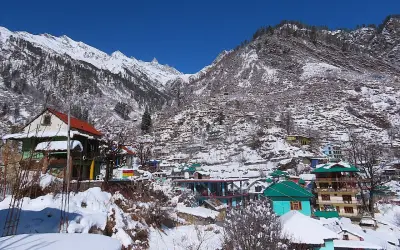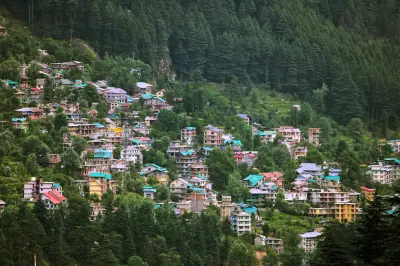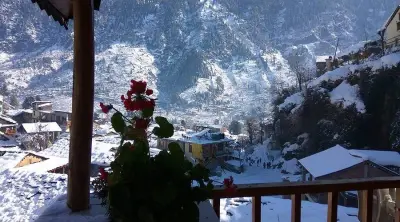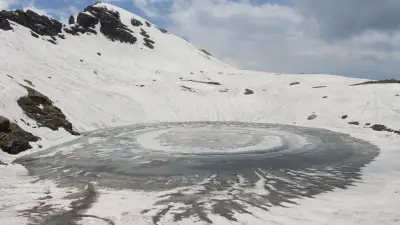





⭐ Featured Snippet: Hampta Pass is a high-altitude mountain pass located at 4,270 metres (14,009 feet) above sea level in the Kullu district of Himachal Pradesh, India. The Hampta Pass trek is a stunning crossover route that connects the lush green Kullu Valley near Manali to the barren, moon-like landscape of the Lahaul Valley. Spanning 5 days and approximately 35 km, it is one of the most dramatic and visually diverse treks in the Indian Himalayas — suitable for beginners with basic fitness. The trek optionally extends to the glacial Chandratal Lake in Spiti, making it a bucket-list Himalayan adventure.
Hampta Pass: A Complete Trekker's Guide
If there is one trek in all of Himachal Pradesh that encapsulates the sheer drama and diversity of the Himalayas in a single route, it is the Hampta Pass trek. In just five days, this extraordinary trail takes you from the emerald forests and wildflower meadows above Manali, up over a spectacular high-altitude pass at 4,270 metres, and deposits you in one of the most surreal, otherworldly landscapes in all of India — the stark, high-altitude desert of the Lahaul Valley.
The contrast is so sudden, so absolute, that trekkers often describe crossing Hampta Pass as stepping from one planet to another. On one side: waterfalls, green meadows, rhododendrons, and the sound of birdsong. On the other: silence, grey moraine, turquoise rivers threading through bare rock, and the vast emptiness of the Trans-Himalayan landscape stretching to the horizon. At Himalayan Frontiers, guiding trekkers across Hampta Pass is one of our greatest joys — and in this comprehensive guide, we share everything you need to plan your perfect Hampta Pass trek.
1. What is Hampta Pass? Geography & Significance
Hampta Pass is a high mountain pass in the Pir Panjal range of the Himalayas, located in the Kullu district of Himachal Pradesh, India. The pass sits at an altitude of 4,270 metres (14,009 feet) and forms a natural gateway between two of Himachal Pradesh's most iconic valleys: the Kullu Valley to the south and the Lahaul Valley to the north.
The Two Worlds of Hampta Pass
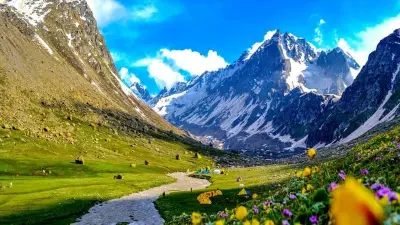
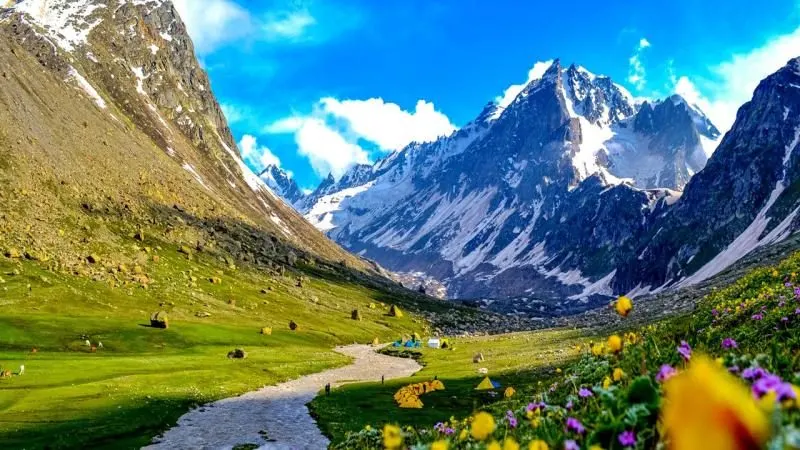
The defining characteristic of the Hampta Pass trek — the feature that sets it apart from virtually every other trek in India — is the dramatic landscape transition it offers. The southern slopes of Hampta Pass, accessible from Manali and the Kullu Valley, are lush with Himalayan vegetation: dense forests, alpine meadows, glacial streams, and an abundance of wildlife. The northern slopes, descending into Lahaul, are entirely different — a high-altitude cold desert reminiscent of the Tibetan Plateau, with sparse vegetation, dramatic rock formations, and an almost eerie, majestic emptiness.
This transition happens over the course of just a few hours of trekking from the Hampta Pass summit — making the Hampta Pass trek one of the most visually rewarding routes in the country, metre for metre.
The Chandratal Extension
Most Hampta Pass trek itineraries include an optional — but highly recommended — extension to Chandratal Lake in the Spiti Valley. Chandratal, meaning 'Moon Lake,' is a crescent-shaped glacial lake at 4,300 metres, known for its impossibly vivid blue-green waters and its position amid the stark Spiti landscape. Adding Chandratal to your Hampta Pass trek transforms the trip from a 5-day adventure into a 6-day journey that spans three of India's most spectacular Himalayan valleys.
2. Hampta Pass Trek Overview: Key Facts
Here is a quick-reference overview of the Hampta Pass trek for those planning their trip:
Trek Name: Hampta Pass Trek
Location: Kullu & Lahaul Districts, Himachal Pradesh, India
Nearest City: Manali (8 km from the trailhead at Jobra)
Starting Point: Jobra (near Prini), Manali
Ending Point: Chatru (Lahaul Valley)
Hampta Pass Altitude: 4,270 metres (14,009 feet)
Trek Duration: 5 days (6 days with Chandratal extension)
Trek Distance: Approximately 35 km (one way crossover)
Difficulty Level: Easy to Moderate
Best Time to Visit Hampta Pass: June to October
Trek Type: One-way crossover (Kullu to Lahaul)
River Crossings: Yes — the Hampta Pass trail involves 2–3 river crossings
Permits Required: Forest permits (arranged by your trek operator)
Maximum Altitude: 4,270 m at Hampta Pass summit
The Hampta Pass trek is perfectly designed for those who want a genuine Himalayan crossover experience without the extreme technical demands of routes like Pin Parvati or Kang La. It delivers maximum drama and diversity with a moderate level of challenge — ideal for fit beginners and intermediate trekkers alike.
3. Best Time to Visit Hampta Pass
Choosing the right time for your Hampta Pass trek is crucial for both safety and the quality of your experience. Here is a month-by-month breakdown:
June: Snow-Covered Pass & Wildflower Meadows
June marks the opening of the Hampta Pass trekking season. The pass itself may still carry significant snow in early June, and river crossings can be swollen and challenging due to glacial meltwater. However, the meadows around Chika and Balu Ka Ghera are stunning — carpeted with wildflowers, and the contrast between snow-covered slopes and green valley floors is spectacular. June is for adventurous trekkers who don't mind snow crossings and challenging rivers on the Hampta Pass trail.
July – August: Monsoon Season
The monsoon reaches the Kullu Valley with moderate intensity in July and August. While the Lahaul side of Hampta Pass remains relatively dry (it lies in the rain shadow of the Pir Panjal range), the approach from Manali can see increased rainfall and cloud cover. River levels are high, increasing the challenge of the Hampta river crossings. That said, the meadows are at their most dramatically green, and the wildflowers peak in July — making it a paradise for nature photographers. Experienced trekkers with good guides will find July and August rewarding for the Hampta Pass trek, albeit more demanding.
September: The Golden Month for Hampta Pass
September is widely considered the best time to do the Hampta Pass trek — and it is our top recommendation at Himalayan Frontiers. The monsoon retreats, leaving behind crystal-clear skies, clean mountain air, and green valleys still lush from the rains. River levels drop to manageable levels, the trails are firm, and the views from the Hampta Pass summit — of the Kullu Valley on one side and the Lahaul desert on the other — are at their absolute finest. If you can only choose one month for the Hampta Pass trek, choose September.
October: Autumn Colours & Arctic Nights
October brings a stunning palette of autumn colours to the forests and meadows below the Hampta Pass treeline. The skies are perfectly clear, and the high-altitude views are breathtaking. However, temperatures drop sharply — nights at the Hampta Pass campsites can dip to -10°C or below. The Hampta Pass trail may receive early snowfall in October, and the season typically closes by late October. Pack for winter conditions if trekking Hampta Pass in October.
November – May: Closed Season
Hampta Pass is inaccessible in winter and spring due to heavy snowfall. Do not attempt the Hampta Pass trek outside the June–October window without professional mountaineering support and specialised equipment.
💡 Himalayan Frontiers Tip: The last week of September is our 'sweet spot' for the Hampta Pass trek — post-monsoon clarity, comfortable temperatures, green valleys, and the first autumn colours beginning to appear. It's when the trek looks exactly like the photographs that made you want to do it.
4. Hampta Pass Trek Itinerary: Day-by-Day Guide
Below is the detailed 5-day Hampta Pass trek itinerary as run by Himalayan Frontiers. This includes the classic crossover from Manali to Chatru in Lahaul.
Day 0: Arrival in Manali (2,050 m)
Most trekkers arrive in Manali from Delhi by overnight Volvo bus (14–15 hours) or via flight to Bhuntar Airport (50 km, 2 hours by taxi). We recommend arriving a day early to acclimatise to Manali's altitude of 2,050 metres before beginning the Hampta Pass trek. Our Himalayan Frontiers team conducts a thorough pre-trek briefing, gear check, and route orientation on this day. Explore Old Manali, the Hadimba Devi Temple, the Manu Temple, or the hot springs of Vashisht to ease into the mountain atmosphere.
Day 1: Manali / Jobra to Chika (3,100 m)
The Hampta Pass trek begins with a short drive from Manali to Jobra (2,990 m) — the trailhead. From Jobra, the trail enters the beautiful Hampta Valley, following the Hampta River upstream through dense forests of walnut, maple, and deodar cedar. The path is gradual and well-defined, crossing several small wooden bridges over the Hampta stream. Your campsite on Day 1 is at Chika (3,100 m), a lovely meadow with your first open views of the surrounding mountains. Trek distance: 5 km. Time: 3–4 hours.
Day 2: Chika to Balu Ka Ghera (3,600 m)
Day 2 of the Hampta Pass trek is where the landscape begins to open up dramatically. The trail climbs gently through progressively wider valleys, past gurgling streams and vast sheep-grazing meadows. Shepherds from nearby villages bring their flocks to these high pastures each summer — an authentic glimpse of traditional Himachali mountain life. The campsite at Balu Ka Ghera (meaning 'sandy enclosure') sits at 3,600 metres beneath a dramatic amphitheatre of peaks including Deo Tibba (6,001 m). Trek distance: 8 km. Time: 4–5 hours.
Day 3: Balu Ka Ghera — Hampta Pass (4,270 m) — Shia Gorge / Siagoru (3,700 m)
This is the defining day of the entire Hampta Pass trek — the day you will remember for the rest of your life. An early alpine start (4:30–5:00 AM) allows you to reach the Hampta Pass summit in the cool morning hours before clouds build. The ascent to Hampta Pass is steep and demanding, crossing snowfields (in June and early October) and rocky terrain. The summit of Hampta Pass at 4,270 metres delivers a 360-degree panorama unlike any other in Himachal Pradesh.
The descent from Hampta Pass into Lahaul is dramatic — the landscape changes within minutes from lush green to grey-brown desert. The trail descends steeply into the Lahaul Valley, crossing the Hampta stream and camping at Shia Gorge or Siagoru (3,700 m). Trek distance: 12 km. Altitude gain and loss: ~670 m gain, ~570 m descent. Time: 8–10 hours. This is the longest and most demanding day of the Hampta Pass trek.
Day 4: Siagoru to Chatru (3,360 m)
Day 4 of the Hampta Pass trek is a relatively easy descent through the spectacular Lahaul Valley. The contrast with the Kullu side of Hampta Pass is total — the Lahaul Valley is a high-altitude cold desert with sparse, scrubby vegetation, dramatic rocky gorges, and the vivid blue-green Chandra River winding through the valley floor. The campsite at Chatru sits at the confluence of the Chandra and Hampta rivers. Trek distance: 8 km. Time: 3–4 hours.
Day 5: Chatru to Chandratal Lake (4,300 m) to Manali OR drive to Manali
From Chatru, trekkers have two options. Those with an additional day can drive to the magical Chandratal Lake in Spiti (approximately 1.5 hours from Chatru on a rough mountain road) — a glacial lake of extraordinary beauty that makes the perfect finale to the Hampta Pass trek experience. After spending time at Chandratal, the group drives back to Manali via the Rohtang Pass or Atal Tunnel (3–4 hours). Those without an extra day drive directly from Chatru to Manali. Trek distance on Day 5 (if Chandratal): 3–4 km walk around the lake. Drive: 3–4 hours to Manali.
⭐ Himalayan Frontiers Recommendation: We strongly recommend adding the Chandratal extension to your Hampta Pass trek package. Chandratal is one of the most beautiful lakes in all of India, and combined with the Hampta Pass crossover, it creates a truly epic Himalayan journey through three valleys — Kullu, Lahaul, and Spiti.
5. How to Reach the Hampta Pass Trailhead
By Air
The nearest airport to the Hampta Pass trailhead is Bhuntar Airport (Kullu–Manali Airport), approximately 50 km from Manali. Regular flights connect Bhuntar to Delhi, Chandigarh, and Mumbai. From Bhuntar, taxis to Manali take approximately 1.5–2 hours. During peak trekking season (June–September), it is essential to book Bhuntar flights well in advance as capacity is limited.
By Train
The nearest broad-gauge railway station is at Chandigarh or Ambala, both approximately 8–9 hours from Manali by road. Jogindernagar (on a narrow-gauge line) is closer at about 3 hours. From Chandigarh, both government HRTC buses and private Volvo coaches make the journey to Manali regularly, taking approximately 7–8 hours.
By Road
Manali is well connected by road from Delhi (540 km), Chandigarh (310 km), and Shimla (270 km). HRTC Volvo buses from Delhi's ISBT Kashmiri Gate to Manali run nightly and are a comfortable, economical option. From Manali, the Hampta Pass trailhead at Jobra is just 8 km away — a 20-minute drive through the scenic Prini village area.
6. River Crossings on the Hampta Pass Trek
One of the most exhilarating — and occasionally challenging — aspects of the Hampta Pass trek is the river crossings. The Hampta Valley is fed by glacial streams and the main Hampta River, and crossing these waterways is an integral part of the Hampta Pass trek experience.
What to Expect at the River Crossings
The Hampta Pass trek typically involves 2–3 river crossings of varying difficulty depending on the time of year. In June and early July, glacial meltwater makes the rivers run fast, cold, and deep — crossings can be thigh-deep and require careful footing. By September and October, the rivers are significantly lower and crossings are much easier. Trekkers should:
Undo the hip strap and chest strap of your rucksack before crossing — this allows you to shed the pack quickly if you fall
Use trekking poles for balance and depth-testing
Cross at the widest, shallowest point — never at river bends where currents are strongest
Remove socks and change into sandals/camp shoes for the crossing to keep your trekking socks and boots dry
Cross one at a time while others watch from the bank — never cross in a huddle
Trust your Himalayan Frontiers guide — our experienced guides scout the crossing point and assist each trekker across
⚠️ Safety Note: All Himalayan Frontiers guides are trained in swift-water awareness and river crossing safety for the Hampta Pass trek. If river levels appear dangerous, our guides will always choose safety over schedule — we have alternative plans for high-water scenarios.
7. Hampta Pass Trek Difficulty & Fitness Requirements
The Hampta Pass trek is classified as Easy to Moderate. While it involves no technical climbing, the high altitude, river crossings, long Day 3, and variable weather conditions mean that a degree of physical preparation is important.
Who Can Do the Hampta Pass Trek?
Fit beginners with no prior trekking experience (adequate preparation required)
Intermediate trekkers looking for a more immersive multi-day Himalayan route
Adventure-seeking young adults and college groups
Families with teenagers aged 14 and above
Corporate team-building and leadership groups
Nature photographers seeking diverse landscapes on a single route
Travellers who want to experience both the green Kullu Valley and the Lahaul desert
Physical Preparation for Hampta Pass
We recommend that trekkers planning the Hampta Pass trek prepare their bodies for at least 4–6 weeks before departure. Daily jogging or brisk walking of 5–8 km, stair climbing (for altitude gain simulation), and core strengthening exercises will make Day 3 — the pass crossing day — significantly more manageable. Yoga and breathing exercises also improve high-altitude endurance for the Hampta Pass summit push.
8. Complete Packing List for Hampta Pass Trek
Packing correctly for the Hampta Pass trek is critical. The weather can change dramatically — you might start the day in warm sunshine on the Kullu side and reach Hampta Pass summit in a snowstorm. Here is what our Himalayan Frontiers experts recommend:
Clothing
Moisture-wicking thermal base layers (2 sets) — essential for Hampta Pass summit day
Fleece mid-layer (300-weight) or a light down jacket
Waterproof and windproof hardshell outer jacket (non-negotiable for Hampta Pass summit)
Trekking trousers — quick-dry and flexible (no jeans)
Warm beanie/woollen cap and balaclava
Waterproof gloves — your hands will thank you on Hampta Pass summit
3–4 pairs of high-quality trekking socks
Lightweight sun hat or cap
UV-protection sunglasses rated Category 3 or 4
Footwear
Waterproof ankle-support trekking boots — properly broken in before the Hampta Pass trek
Sandals or crocs for camp and river crossings
Gaiters — useful on snow sections of Hampta Pass in June and October
Microspikes/crampons — for early season (June) Hampta Pass snow crossings
Gear & Equipment
Trekking poles — very highly recommended, especially for Hampta Pass descent
45–55 litre rucksack with rain cover
Sleeping bag rated to -15°C (Hampta Pass campsites get very cold)
Headlamp with spare batteries — needed for early morning Hampta Pass summit day start
Portable water filter or purification tablets
High-energy snacks: nuts, dry fruit, energy bars, dark chocolate
Personal first aid kit (blisters, cuts, muscle pain)
Offline maps / GPS navigation app (network is absent at Hampta Pass)
Health & Medical
Diamox (acetazolamide) — for Acute Mountain Sickness prevention; consult your doctor before the Hampta Pass trek
Ibuprofen and paracetamol for pain and headache
Oral Rehydration Salts (ORS) — crucial for staying hydrated on Hampta Pass summit day
Sunscreen SPF 50+ and SPF lip balm — UV radiation is intense at Hampta Pass altitude
Blister plasters and moleskin — river crossings and long days cause blisters
Personal prescription medications — carry more than needed
9. Hampta Pass Trek Cost & Package Details
At Himalayan Frontiers, we believe every trekker deserves full transparency on pricing. Here is what our Hampta Pass trek packages typically include and exclude:
Included in Himalayan Frontiers' Hampta Pass Trek Package
Certified, experienced Himalayan trek guide throughout the Hampta Pass trek
All camping equipment: sleeping tents, dining tent, kitchen tent
All meals during the trek — breakfast, packed lunch, evening snacks, dinner
Dedicated trek cook with nutritious, hygienic Himalayan meal preparation
Experienced support staff and high-altitude porters
First aid kit, pulse oximeters, and emergency evacuation support for Hampta Pass
Forest permits and environmental fees
Transport from Manali to Jobra trailhead and Chatru back to Manali
Pre-trek briefing and gear check in Manali
Not Included
Travel to and from Manali
Personal trekking gear and clothing
Travel insurance — mandatory, strongly recommended
Personal porter for luggage exceeding 10 kg
Any costs arising from medical evacuation
Chandratal entry fees (if extension added)
Contact Himalayan Frontiers directly for current Hampta Pass trek package pricing. We offer group discounts for parties of 6 or more, student rates, and seasonal early-bird offers.
10. Chandratal Lake: The Perfect Hampta Pass Trek Extension
No article about the Hampta Pass trek is complete without a dedicated section on Chandratal Lake — the jewel of the Spiti Valley that most Hampta Pass trekkers visit as a post-trek extension.
What is Chandratal Lake?
Chandratal (meaning 'Moon Lake' in Hindi) is a crescent-shaped glacial lake located at an altitude of approximately 4,300 metres in the Spiti Valley of Himachal Pradesh. The lake sits in a broad, flat valley surrounded by ancient moraines and the barren, ochre-coloured hills of Spiti. What makes Chandratal extraordinary — and why it is a worthy finale to the Hampta Pass trek — is the almost supernatural quality of its waters: a shifting palette of electric blue, turquoise, and emerald that changes with the angle of light throughout the day.
How to Reach Chandratal from Chatru
From the Hampta Pass trek endpoint at Chatru, Chandratal Lake is approximately 65 km by road (1.5–2 hours on an unmaintained mountain track). Most Hampta Pass trek operators, including Himalayan Frontiers, arrange a jeep or cab for this journey as part of the Chandratal extension day.
Camping at Chandratal
There is a designated camping zone near Chandratal Lake, and camping here overnight is a truly magical experience. Waking at dawn to see the first light hit the snow-capped peaks reflected in Chandratal's perfectly still waters is a memory that stays with trekkers for decades. The night sky above Chandratal — at 4,300 metres with zero light pollution — is one of the finest stargazing experiences anywhere in India.
📸 Photography Note: Chandratal Lake photographs best at sunrise and sunset when the light turns the surrounding peaks shades of gold and pink and the lake surface mirrors the sky. Carry a wide-angle lens and a tripod for astrophotography at night.
11. Flora & Fauna on the Hampta Pass Trek
Flora
The Hampta Pass trek passes through multiple vegetation zones, each with its own botanical character. The lower reaches of the Hampta Valley (2,990–3,200 m) are clothed in forests of deodar cedar, blue pine, oak, and walnut. Above 3,200 metres, the forest gives way to alpine meadows rich with wildflowers: blue Himalayan poppies, yellow cinquefoil, white edelweiss, purple primulas, and a dozen species of wild geranium. Above Balu Ka Ghera, the vegetation thins rapidly as you approach Hampta Pass, replaced by cushion plants, mosses, and lichen clinging to the rocky terrain. On the Lahaul side of Hampta Pass, the landscape is near-barren, with only hardy drought-adapted shrubs surviving in the cold desert environment.
Fauna
The Hampta Pass ecosystem supports a rich but often elusive array of Himalayan wildlife. Himalayan marmots are commonly seen near the higher campsites, often heard before they are seen — their sharp warning whistle echoing across the meadows. Snow leopards (Panthera uncia) patrol the higher ridges and rocky faces near Hampta Pass, though sightings are extremely rare. Himalayan tahr, Himalayan blue sheep (bharal), red fox, and weasels are more frequently encountered. The skies above Hampta Pass host griffon vultures, lammergeiers, golden eagles, and kestrels.
12. Altitude Sickness on the Hampta Pass Trek: Everything You Need to Know
At 4,270 metres, Hampta Pass sits firmly within the altitude zone where Acute Mountain Sickness (AMS) can affect even physically fit individuals. Understanding and respecting altitude is the single most important safety consideration on the Hampta Pass trek.
Symptoms of AMS to Watch For
Persistent headache — especially if not relieved by hydration and rest
Nausea and vomiting
Loss of appetite
Dizziness and difficulty with balance
Shortness of breath at rest or with minimal exertion
Extreme fatigue disproportionate to effort
Disturbed or impossible sleep at altitude
AMS Prevention on the Hampta Pass Trek
Arrive in Manali at least one day before the Hampta Pass trek begins — acclimatise at 2,050 m
Drink 3–4 litres of water per day throughout the Hampta Pass trek
Ascend gradually — our Hampta Pass itinerary is carefully paced to allow for gradual acclimatisation
Avoid alcohol during the first 48 hours in Manali
Consider Diamox (125–250 mg twice daily starting 24 hours before ascent) — consult your doctor
At any sign of AMS worsening despite rest on the Hampta Pass trail, descend immediately
Inform your Himalayan Frontiers guide immediately if you feel unwell at any point
⚠️ Critical Safety Rule: The golden rule of high-altitude trekking is: never ascend with worsening symptoms. The only cure for altitude sickness is descent. Our Himalayan Frontiers guides carry portable pulse oximeters and emergency oxygen on all Hampta Pass treks. Your safety is always our first priority.
13. Hampta Pass vs Other Manali Treks: A Comparison
Hampta Pass vs Bhrigu Lake Trek
The Bhrigu Lake trek (4,300 m) is shorter at 3–4 days and is an out-and-back route rather than a crossover. Bhrigu Lake is more suitable for complete beginners and those with limited time. Hampta Pass, at 5 days, offers a far more immersive experience with greater landscape diversity — the crossover from Kullu to Lahaul is unmatched. For trekkers who have already done Bhrigu Lake with Himalayan Frontiers, Hampta Pass is the natural next step up.
Hampta Pass vs Beas Kund Trek
The Beas Kund trek (3,700 m) is a gentle 2–3 day route to a glacial lake near Solang Valley — ideal for families and first-timers. Hampta Pass is significantly more challenging and rewarding. Beas Kund is for beginners; Hampta Pass is for those ready to push their limits and experience a genuine Himalayan crossover.
Hampta Pass vs Sar Pass Trek
Sar Pass (4,250 m), accessed from Kasol in the Parvati Valley, is another popular intermediate Himachal Pradesh trek of similar duration and difficulty. Hampta Pass offers a more dramatic landscape contrast (lush valley to cold desert) and the option of a Chandratal extension. Sar Pass involves more rappelling and snow slides, making it slightly more adventurous. Both are excellent choices — the decision depends on which starting base (Manali vs. Kasol) suits your travel plans.
Hampta Pass vs Pin Parvati Pass Trek
The Pin Parvati Pass trek (5,319 m) is in an entirely different league of difficulty — a demanding 9–11 day expedition requiring prior high-altitude experience and technical snow/glacier skills. If Hampta Pass is your first crossover trek, Pin Parvati is where you can aspire to go after a few more seasons of building your Himalayan trekking experience.
14. Accommodation & Camping on the Hampta Pass Trek
The Hampta Pass trek is entirely a camping trek. There are no permanent tea houses, lodges, or hotels on the trail between Jobra and Chatru. This camping immersion is one of the most beloved aspects of the Hampta Pass experience — waking in a tent at 3,600 metres to frost on the grass, a mug of hot chai in your hands, and Himalayan peaks turning gold at sunrise is a life-enriching experience.
Our Camping Standards on Hampta Pass
At Himalayan Frontiers, we believe that camping on the Hampta Pass trek should be comfortable, safe, and leave no trace. We provide:
High-quality 3-season dome tents with waterproof fly sheets
Comfortable sleeping mats for insulation from the cold ground
Sleeping bags rated to -15°C (available for rent if you don't own one)
Spacious dining tents with foldable tables and seating
Dedicated toilet tents at each Hampta Pass campsite
Hot water for washing at campsites when available
Three hot, nutritious meals per day plus snacks — including dal, rice, pasta, chapati, eggs, soups, porridge, and Himalayan herbal teas
Pre and Post Trek Accommodation in Manali
Manali offers accommodation options across all budget ranges — from luxury riverside resorts to budget backpacker hostels in Old Manali. Himalayan Frontiers can arrange your pre and post-Hampta Pass trek accommodation in Manali as part of a complete package. We work with a selection of trusted properties that offer trekker-friendly early check-ins and luggage storage.
15. Responsible Trekking at Hampta Pass: Our Environmental Commitment
Hampta Pass and its surrounding ecosystem in the Kullu and Lahaul Valleys are fragile, irreplaceable environments. The growing popularity of the Hampta Pass trek means that environmental stewardship has never been more important. At Himalayan Frontiers, sustainability is not a marketing slogan — it is the foundation of how we operate every Hampta Pass trek.
Zero-waste camping: all non-biodegradable waste is carried out of the Hampta Pass zone
Biodegradable products only near water sources on the Hampta Pass trail
Designated campsite use only — no camping in undesignated meadows
Strict no-campfire policy above 3,500 m on the Hampta Pass trek (gas stoves only)
No wildflower picking or wildlife disturbance on the Hampta Pass trail
Support for local Himachali communities: all our Hampta Pass trek staff are locally sourced
Trail clean-up drives: Himalayan Frontiers conducts regular clean-up expeditions on the Hampta Pass route
🌿 Our Pledge: For every Hampta Pass trek we operate, Himalayan Frontiers contributes to the Manali Forest Department's reforestation fund and the local porter welfare programme. When you trek with us, you are directly supporting the communities and ecosystems that make Hampta Pass one of India's greatest natural treasures.
16. Frequently Asked Questions About Hampta Pass Trek
Q: Is Hampta Pass suitable for beginners?
Yes, the Hampta Pass trek is suitable for beginners with adequate physical fitness. It is classified as Easy to Moderate and does not involve technical climbing. However, the high altitude (4,270 m at Hampta Pass summit), river crossings, and long Day 3 mean that preparation is essential. At Himalayan Frontiers, our experienced guides have successfully led hundreds of first-time trekkers across Hampta Pass.
Q: How many days is the Hampta Pass trek?
The standard Hampta Pass trek is 5 days from Manali to Chatru. With the Chandratal Lake extension — which we strongly recommend — the trek becomes 6 days. Add one day at the start for arrival and acclimatisation in Manali, and plan for 7–8 days total for the complete Hampta Pass experience.
Q: What is the total distance of the Hampta Pass trek?
The Hampta Pass trek covers approximately 35 km from Jobra to Chatru as a one-way crossover route. Adding the Chandratal excursion adds a further 3–4 km of walking around the lake.
Q: Can I do Hampta Pass in 4 days?
A 4-day Hampta Pass itinerary is possible but not recommended. The standard 5-day pacing is designed to allow for safe acclimatisation and a comfortable experience on the critical pass-crossing day. Rushing the Hampta Pass trek increases the risk of altitude sickness and reduces the quality of the experience.
Q: How cold does it get at Hampta Pass?
At Hampta Pass summit (4,270 m), temperatures can drop to -5°C to -15°C even in summer. Night temperatures at the Balu Ka Ghera campsite (3,600 m) regularly fall below 0°C from late August onwards. Always carry a sleeping bag rated to -15°C for the Hampta Pass trek regardless of the time of year.
Q: Is there network coverage on the Hampta Pass trek?
Mobile network coverage becomes unreliable after Jobra on the Hampta Pass trail and is effectively absent above Chika campsite. The Lahaul Valley side of Hampta Pass (Chatru, Chandratal) may have intermittent BSNL coverage. Himalayan Frontiers guides carry satellite communication devices on all Hampta Pass treks for emergency use.
Q: Do I need prior trekking experience for Hampta Pass?
Prior trekking experience is helpful but not mandatory for the Hampta Pass trek. What is more important is good aerobic fitness, a positive attitude, and a willingness to follow your guide's instructions — particularly regarding pace, hydration, and altitude symptoms. We recommend completing the Bhrigu Lake trek or a similar moderate high-altitude route before attempting Hampta Pass if you have no prior experience.
Q: What is the best route for Hampta Pass?
The standard and most popular Hampta Pass trek route is: Manali → Jobra → Chika → Balu Ka Ghera → Hampta Pass → Siagoru → Chatru → Chandratal → Manali. This one-way crossover route is what Himalayan Frontiers operates for all its Hampta Pass treks. It offers the maximum landscape diversity and the full crossover experience.
Q: Is Hampta Pass open in June?
Yes, Hampta Pass typically opens for trekking in early to mid-June, weather permitting. The Hampta Pass trail in June involves snow crossings near the summit and potentially challenging river crossings due to high glacial meltwater. It is a more adventurous experience in June and best attempted with an experienced guide and operator like Himalayan Frontiers.
Book Your Hampta Pass Trek with Himalayan Frontiers
The Hampta Pass trek is more than a mountain route — it is a journey between two worlds, a crossing between the lush green valleys of Kullu and the vast, silent high-altitude desert of Lahaul that will stay with you long after you have returned to the plains. At Himalayan Frontiers, we have been guiding trekkers across Hampta Pass for years with an impeccable safety record and a reputation for excellence in Himalayan adventure travel.
Our Hampta Pass trek packages are designed to be flexible — we can tailor the duration, group size, difficulty level, and inclusions (including the Chandratal extension) to your exact needs. Whether you are a solo adventurer, a couple, a family, a college group, or a corporate team, our Himalayan Frontiers experts will craft the perfect Hampta Pass trek experience for you.
Slots for the Hampta Pass trekking season (June–October) fill up quickly, especially for July, September, and the October long weekends. Contact our team at Himalayan Frontiers today to check availability and secure your spot on one of the greatest treks in India.
📞 Himalayan Frontiers: Your trusted Himalayan adventure travel experts in Manali, Himachal Pradesh. Certified guides, world-class safety standards, and unforgettable experiences on the Hampta Pass trek, Bhrigu Lake, Beas Kund, Sar Pass, Chandratal, and beyond. Book your Hampta Pass trek today — the mountains are waiting.
© Himalayan Frontiers | Manali, Himachal Pradesh, India
All content is based on first-hand Hampta Pass trekking experience and is intended for informational purposes only. Always consult a licensed medical professional before trekking at high altitude.